
Digital Rights

The Informal Economy and African-Language AI in the AfCFTA Digital Trade Regime

The AfCFTA serves as the map for African trade and economic development, its mandate charging the continent toward an economic utopia. Yet its digital protocol, with a core scope built around diversity and vulnerable populations, excludes 90 percent of Africa's economic engine : the informal sector. This exclusion is further compounded by the language exclusion informal enterprises face, where digital platforms and AI systems meant to power digital trade have yet to incorporate indigenous languages, stifled by a data drought that is decades in the making. This paper argues that the interaction of the Digital Trade Protocol and its Rules of Origin Annex leaves informal cross-border traders without a clear, proportionate route to digital trade benefits, and that unequal African-language AI capacity turns the Protocol's promise of legal inclusion into practical exclusion.
Call for Papers: WOLAS Conference Series (WCS) 2026 - Rights in the AI Race | Istanbul University | 4–5 December 2026

The News and Events category publishes the latest News and Events relating to International Economic Law relating to Africa and the Global South. Every week, Afronomicslaw.org receive the News and Events in their e-mail accounts. The News and Events published every week include conferences, major developments in the field of International Economic Law in Africa at the national, sub-regional and regional levels as well as relevant case law. News and Events with a Global South focus are also often included.

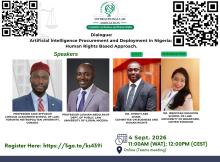
Dialogue on AI and Human Rights - ILA-Nigeria Committee on Business and Human Rights

The News and Events category publishes the latest News and Events relating to International Economic Law relating to Africa and the Global South. Every week, Afronomicslaw.org receive the News and Events in their e-mail accounts. The News and Events published every week include conferences, major developments in the field of International Economic Law in Africa at the national, sub-regional and regional levels as well as relevant case law. News and Events with a Global South focus are also often included.

Call for Papers - Digital Solidarity and International Law: Collective Action and Human Rights in the Digital Age

“Digital Solidarity and International Law: Collective Action and Human Rights in the Digital Age” is an edited volume to be published under a contract with Routledge in the Routledge Research in International Law series. It will examine how solidarities are formed and expressed in the digital sphere and their implications for international law in areas including human rights, trade, environment, health, and peace and security. The volume is edited by Dr Yohannes Eneyew Ayalew (The Hebrew University of Jerusalem), Dr Karin M Frodé (Monash University), and Dr Christopher Nyinevi (ECOWAS Court of Justice).

Digital Solidarity in Action: Paving the Way for Collective Resolution of Sovereign Debt Crises

This post seeks to unravel the intricate dimensions of digital solidarity in the face of crises, with an explicit concentration on the predicaments associated with sovereign debt. It argues that digital platforms have great potential to encourage shared responsibility and facilitate collective action to resolve sovereign debt crises. Through the employment of technology to close gaps, smoothen communication, and facilitate collaborative problem-solving, digital solidarity might lay the groundwork for creating internationally endorsed solutions to sovereign debt crises, thus fostering a more robust and inclusive global economic environment. In addition, the post will examine the challenges of digital solidarity in addressing sovereign debt crises. It will examine the underpinnings of international law and policy, exploring how they may influence or shape the notion of digital solidarity and aims to conceptualise effective strategies to mobilise digital solidarity in crisis response and debt resolution. By shedding light on the transformative power of digital solidarity as a practical tool for global economic reform, this post aspires to contribute to a more balanced and resilient global economy. This post argues that harnessing digital solidarity can lead to more equitable solutions to sovereign debt crises.