
Mozambique

Sovereign Debt News Update No. 170: Mozambique’s Debt Paradox: A Turning Point Masking Structural Fragility

Mozambique has entered 2026 with a seemingly positive milestone, having fully repaid its outstanding obligations to the International Monetary Fund (IMF) ahead of schedule. This development, which might ordinarily signal improved fiscal health and strengthened macroeconomic stability, instead unfolds against a backdrop of intensifying domestic debt pressures, constrained fiscal space, and growing socio-economic strain. While authorities have framed the early repayment as evidence of sound financial management and renewed credibility, emerging data suggests a more complex and concerning reality. Domestic borrowing has surged, external financing conditions remain tight, and key development projects face increasing uncertainty. Mozambique’s trajectory mirrors a wider trend across African sovereigns, where headline debt milestones often sit alongside intensifying structural vulnerabilities and fiscal strain. Against this backdrop, this update explores the country’s recent full repayment of its IMF obligations in parallel with rising domestic debt pressures and tightening fiscal space.

Sovereign Debt News Update No. 135: Understanding Mozambique’s Hurdles Under the Previous IMF Extended Credit Facility (ECF) Programme

The African Sovereign Debt Justice Network, (AfSDJN), is a coalition of citizens, scholars, civil society actors and church groups committed to exposing the adverse impact of unsustainable levels of African sovereign debt on the lives of ordinary citizens. Convened by Afronomicslaw.org with the support of Open Society for Southern Africa, (OSISA), the AfSDJN's activities are tailored around addressing the threats that sovereign debt poses for economic development, social cohesion and human rights in Africa. It advocates for debt cancellation, rescheduling and restructuring as well as increasing the accountability and responsibility of lenders and African governments about how sovereign debt is procured, spent and repaid. Focusing in particular on Kenya, Zambia, Zimbabwe, Mozambique, Nigeria and Senegal, the AfSDJN will also amplify African voices and decolonize narratives on African sovereign debt . Its activities include producing research outputs to enhance the network’s advocacy interventions. It also seeks to create awareness on and elevate the priority given to sovereign debt and other economic justice issues on the African continent and beyond throughout 2021.
Sovereign Debt News Update No. 131: Mozambique’s Sovereign Debt Landscape Post October 2024 Elections

Undoubtedly, this fragile political environment has significant economic implications, including declining investor confidence, disruptions to economic activities, and a worsening fiscal outlook. For ordinary Mozambicans, political instability translates into rising costs of living, limited access to essential services, and growing concerns about economic security. Mozambique's debt situation remains precarious, with the government balancing debt issuance, salary obligations, and governance challenges. While efforts to settle debts and stabilize finances are ongoing, political instability and calls for accountability will be crucial in shaping the country's economic trajectory. The African Sovereign Debt Justice Network (AfSDJN) continues to monitor developments, advocating for the promotion of peace for the creation of a conducive environment for just and transparent debt management processes that prioritize economic justice and sustainable financial governance.

One Hundred and Twenty-Fifth Sovereign Debt News Update: The Republic of Mozambique v Credit Suisse International and others [2024]: The Responsibilities of Advisory Banks in Sovereign Debt Procurement Under English Law

Between 2013 and 2016, three Mozambican government-controlled enterprises discreetly borrowed $2 billion from major international banks to buy a tuna-fishing fleet and surveillance vessels. Mozambique’s then finance minister, Manuel Chang, signed guarantees that the government would repay the loans, which were critical reassurance to lenders who would otherwise have avoided the brand-new enterprises. The companies defaulted on the loans, leaving Mozambique with a $2 billion debt, about 12% of the nation’s gross domestic product at the time. A country that the World Bank had designated one of the world’s 10 fastest-growing economies for two decades was abruptly plunged into financial upheaval. The scandal was only uncovered in 2016 after Mozambique defaulted on these hidden debts, prompting the International Monetary Fund and international donors to halt funding and plunging the country into an economic crisis. The case of the Republic of Mozambique v. Credit Suisse International and others [2024] dated July 29, 2024 and heard in the High Court of England and Wales (Commercial Court) has reinvigorated the prospect of pursuing justice in foreign courts, especially in cases involving complex international financial misconduct and irresponsible lending practices.

Mozambique and the Islamic Finance, the Alternative in the Post-Covid 19 Situation.

With the looming post-Covid 19 crisis and the potential loss of liquidity in the banking market, the Islamic financial system (internationally known as "Islamic Finance") may provide an alternative to the African banking model for customers and could provide additional ways for domestic banks to finance themselves.

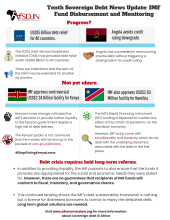
Tenth Sovereign Debt News Update: IMF Fund Disbursement and Monitoring

The African Sovereign Debt Justice Network brings to you an update of African sovereign debt news and updates on events and happenings on and about Africa that reveal how sovereign debt issues are engaged by the various stakeholders.

Eighth Sovereign Debt News Update: The Re-Incurring and Extinguishing of Sovereign Debt

The African Sovereign Debt Justice Network brings to you an update of African sovereign debt news and updates on events and happenings on and about Africa that reveal how sovereign debt issues are engaged by the various stakeholders.