Human Rights Law

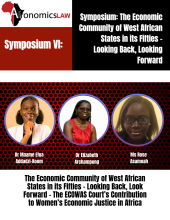
Symposium VI: The Economic Community of West African States in its Fifties – Looking Back, Look Forward - The ECOWAS Court’s Contribution to Women’s Economic Justice in Africa

Promoting economic cooperation and development among Member States has been the primary aim of the Economic Community of West African States (ECOWAS) since its inception in 1975. Unsurprisingly, in the beginning, the Community’s only judicial body, the ECOWAS Court, only had a mandate to foster socio-economic integration. Consequently, when the Court was granted a human rights mandate in 2005, it was expected that advancing economic justice and safeguarding economic rights would underpin its adjudicatory functions. The economies of countries in West Africa exhibit a significant gender gap, which manifests in various ways, including the gender pay gap, women disproportionately engaged in informal and vulnerable employment, unequal access to job opportunities, occupational segregation, unequal asset ownership, limited access to financial services, and unpaid care work.In this blog post, we provide a brief overview of two cases decided by the ECOWAS Court that concern women’s rights to work, showcasing the Court’s role in promoting women’s economic justice in the West African sub-region and beyond. However, before discussing these cases, which inform our conclusions, we briefly explore the nature of the right to work for women within the African human rights system.

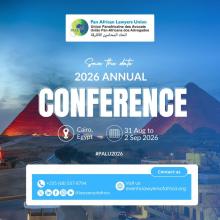
Pan African Lawyers Union Annual Conference 2026

The News and Events category publishes the latest News and Events relating to International Economic Law relating to Africa and the Global South. Every week, Afronomicslaw.org receive the News and Events in their e-mail accounts. The News and Events published every week include conferences, major developments in the field of International Economic Law in Africa at the national, sub-regional and regional levels as well as relevant case law. News and Events with a Global South focus are also often included.

Call for Papers - Digital Solidarity and International Law: Collective Action and Human Rights in the Digital Age

“Digital Solidarity and International Law: Collective Action and Human Rights in the Digital Age” is an edited volume to be published under a contract with Routledge in the Routledge Research in International Law series. It will examine how solidarities are formed and expressed in the digital sphere and their implications for international law in areas including human rights, trade, environment, health, and peace and security. The volume is edited by Dr Yohannes Eneyew Ayalew (The Hebrew University of Jerusalem), Dr Karin M Frodé (Monash University), and Dr Christopher Nyinevi (ECOWAS Court of Justice).