West Africa

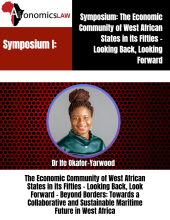
Symposium I: The Economic Community of West African States in its Fifties – Looking Back, Look Forward - Beyond Borders: Towards a Collaborative and Sustainable Maritime Future in West Africa

The ocean and its resources support many sectors vital to the West African region, including fisheries and aquaculture, maritime transport and shipping, maritime security, coastal and maritime tourism, sustainable energy, mineral resources, and emerging marine industries. Collectively, these sectors are called the “Blue Economy” (BE). The BE is a cornerstone of economic growth, sustainability, and security for the twelve coastal and island states and three land-linked countries in the region, providing livelihoods for millions and serving as a primary revenue source for coastal and island states. The BE contributes 56% of the GDP of coastal states in West Africa, underscoring its economic significance. With one-third of the region’s population residing in coastal areas, its ocean and resources are essential to food security, trade, and long-term resilience, making them a crucial driver of sustainable development in West Africa.

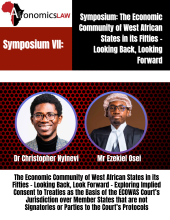
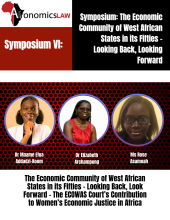
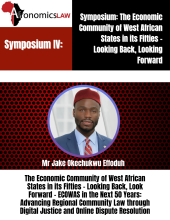
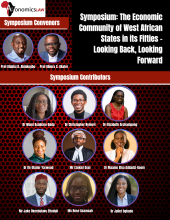
Symposium Introduction: The Economic Community of West African States (ECOWAS) in its Fifties – Looking Back, Looking Forward

The Economic Community of West African States (ECOWAS), perhaps the most successful regional economic community in Africa, at least until recently, turns fifty-one (51) on May 28, 2026. ECOWAS, which was established on 28 May 1975 was tasked with the goal of promoting economic and political integration among its member states. Specifically, ECOWAS Treaty offers a key summary of its vision: “promoting co-operation and integration, leading to the establishment of an Economic Union in West Africa in order to raise the living standards of the peoples, and to maintain and enhance economic stability, foster relations-among Member States and contribute to the progress and development of the African Continent.”

Ghana Seeks International Arbitration under UNCLOS over Maritime Boundary Dispute with Togo

The Government of Ghana has formally notified the Government of Togo of its decision to initiate international arbitration under the United Nations Convention on the Law of the Sea (UNCLOS) in order to resolve their dispute over maritime boundary in the Gulf of Guinea. In a statement released on 20 February 2026, the Government indicated: “This follows attempts at negotiating a boundary which have gone on for eight years but have not resulted in an agreed outcome”.

Sovereign Debt News Update No. 159: Arbitration Claims Arise in Guinea’s Bauxite Economy: The Politics of Mineral Sovereignty

Guinea occupies a structurally significant position in the global minerals economy as the world’s largest holder of bauxite reserves and second leading producer of the ore, which is indispensable for aluminium production and increasingly recognised as strategically important to global industrial supply chains. This update examines Guinea’s intensifying resource nationalism in the global bauxite sector, focusing on the revocation of mining licences, the resulting high-value international arbitration claims, and the government’s planned legal defence. It situates these developments within broader African debates on bauxite’s strategic importance, mineral governance, and efforts to reclaim sovereign control and value from critical raw materials.

The AfronomicsLaw Academic Forum (West Africa) Hosts its Inaugural Afronomicslaw Lab Session

The News and Events category publishes the latest News and Events relating to International Economic Law relating to Africa and the Global South. Every week, Afronomicslaw.org receive the News and Events in their e-mail accounts. The News and Events published every week include conferences, major developments in the field of International Economic Law in Africa at the national, sub-regional and regional levels as well as relevant case law. News and Events with a Global South focus are also often included.

Another blow to ECOWAS’ regional governance architecture….?

As has previously been noted, unconstitutional change of government by other means have led the bloc - and the African Union - to where we are today by undermining both continental and regional governance agendas. If ECOWAS really wants to be serious about governance going forward, it needs to put aside meaningless bluffs, and instead focus on cleaning house, both by updating and refining its instruments and taking a firmer stand against all forms of unconstitutional changes of government. 

Afronomicslaw Academic Forum launches in West Africa

January 22, 2022

Following the establishment of the Afronomicslaw Academic Forum in Eastern and Southern Africa, we are delighted to announce the launch of the Academic Forum in West Africa. The Forum welcomes twenty-seven pioneer Representatives from Nigeria, Ghana, Sierra Leone, Togo and Morocco.

The Forum will be led by the trio of:

Call For Regional Representatives For the Afronomicslaw Academic Forum (Eastern Africa) March 2021

Members of the Academic Forum are called ‘Regional Representatives’. There are three major ‘streams’ or ‘departments’ within the Forum; namely, the editorial stream, the partnerships stream and the general Stream. However, and for efficiency purposes, one must first join the general Stream and, where slot later opens up in either of the editorial or partnerships stream, he/she/they may apply for a position in the relevant Stream.