Global Governance

Book Review Symposium IV of Economic Sanctions from Havana to Baghdad: Sanctions’ Impact on Strategic Priorities of African Economies

Governments in Africa have been active participants in the big global debates on sanctions, particularly at the United Nations. In recent years, however, the bigger debates seem to be receding into the background as governments get tied up tackling the immediate and practical implications of ever-expanding sanctions by global powers. The growing number and complexity of sanctions regimes impacts African states even when those states are not targeted. And admittedly the approach of championing broad-brush positions (e.g. ‘illegality of unilateral coercive measures’ through the UN General Assembly) is not producing the necessary shield from impact. Sophisticated sanctions regimes are producing sophisticated economic impacts that need to be countered with technical depth, exploiting exemptions, adjusting and sanctions-proofing trading systems, developing sanctions expertise, etc.

Book Review Symposium III of Economic Sanctions from Havana to Baghdad: The Chilling Effect Beyond Borders - Sanctions Compliance, De-Risking, and the Marginalization of Nigeria's NGO Sector

Economic sanctions are typically viewed as instruments of statecraft — mechanisms for foreign policy and international pressure. They have evolved from blunt, economy-wide measures to increasingly targeted tools directed at specific individuals, entities, and sectors. Though proponents of these more recent "smart" sanctions argue that such measures punish only bad actors while sparing ordinary civilians, Economic Sanctions from Havana to Baghdad challenges this assumption, arguing that no matter how carefully sanctions are designed, adjusted, or targeted, they retain the capacity to cause real harm to civilian populations.

Public Consultations of UNIDROIT Instruments

The News and Events category publishes the latest News and Events relating to International Economic Law relating to Africa and the Global South. Every week, Afronomicslaw.org receive the News and Events in their e-mail accounts. The News and Events published every week include conferences, major developments in the field of International Economic Law in Africa at the national, sub-regional and regional levels as well as relevant case law. News and Events with a Global South focus are also often included.

Book Review Symposium II: Legal but Illegitimate? Lessons for ECOWAS Law and Praxis in Joy Gordon, ed., Economic Sanctions from Havana to Baghdad

Joy Gordon’s twenty-one chapter edited volume is a massive contribution to the study of the character, legality, legitimacy, effectiveness, and impacts of economic sanctions in our time (Gordon, 2026). It is a major tome – certainly voluminous, seamlessly multidisciplinary, and quite encompassing. It is an excellent work of scholarship: thoroughly researched, written and edited; highly analytical; and very illuminating.

Book Review Symposium I of Economic Sanctions from Havana to Baghdad: Africa as the Most Heavily Sanctioned Region of the World - A Critical Overview

The book Economic Sanctions from Havana to Baghdad: Legitimacy, Accountability, and Humanitarian Consequences raises concerns of social justice, an important ethical issue about the legitimacy of sanctions, and concerns about the humanitarian crises that economic sanctions are bound to cause. Filipenko et al. define economic sanctions as mechanisms that involve restrictive economic measures applied by a country or group of countries to another country or group of countries to coerce the governments of those countries to change their policies. These measures are not only taken by countries against countries but also by international bodies against individuals and entities within countries. These sanctions at the international level are often used to exert political and economic leverage and secure a specific form of capitulation or change from the sanctioned country, entity, or individual.

Book Review Symposium: Introduction to Symposium on Economic Sanctions from Havana to Baghdad: Legitimacy, Accountability, and Humanitarian Consequences

This volume, Economic Sanctions from Havana to Baghdad: Legitimacy, Accountability, and Humanitarian Consequences, published in 2026 by Cambridge University Press, seeks to incorporate many of the perspectives that have been underrepresented in the academic discourse. This includes the work of scholars from sanctioned countries, such as Iran, Iraq, Venezuela, Cuba, and Syria. It also includes the perspectives of practitioners, such as attorneys and humanitarian aid workers. In addition, this volume addresses issues that are complex, but of great significance. For example, while sanctions often include humanitarian exemptions for food, the reality is that the regulatory regimes are so burdensome and unclear that private actors—banks, shipping companies, aid organizations, donors, insurers, and on and on—are driven away from engaging in even legal, humanitarian transactions.


Call for Papers: 10th Asian International Economic Law Network Conference

The News and Events category publishes the latest News and Events relating to International Economic Law relating to Africa and the Global South. Every week, Afronomicslaw.org receive the News and Events in their e-mail accounts. The News and Events published every week include conferences, major developments in the field of International Economic Law in Africa at the national, sub-regional and regional levels as well as relevant case law. News and Events with a Global South focus are also often included.

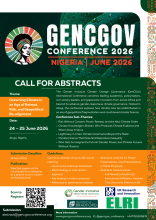
Call for Papers | GenCGov Conference 2026 Abuja, Nigeria | 24 - 25 June 2026

The News and Events category publishes the latest News and Events relating to International Economic Law relating to Africa and the Global South. Every week, Afronomicslaw.org receive the News and Events in their e-mail accounts. The News and Events published every week include conferences, major developments in the field of International Economic Law in Africa at the national, sub-regional and regional levels as well as relevant case law. News and Events with a Global South focus are also often included.

En Route to Yaounde: The WTO's Moment of Truth - Ministers Gather in Cameroon as the Multilateral Trading System Faces its Defining Test

As 166 trade ministers converge on Yaounde for the World Trade Organization's Fourteenth Ministerial Conference (MC14), they confront a defining choice: deliver substantive reform or preside over the multilateral trading system's gradual irrelevance. Africa's decision to host this conference at such a critical juncture carries profound symbolic and substantive weight—particularly for the continent's 1.4 billion people and the world's poorest economies whose prosperity depends on rules-based, rather than power-based, international trade.

Joint Webinar - Prime Minister Carney’s Davos Speech: Implications for International Law/Le discours de Davos du premier ministre Carney: quelles conséquences pour le droit international?

The News and Events category publishes the latest News and Events relating to International Economic Law relating to Africa and the Global South. Every week, Afronomicslaw.org receive the News and Events in their e-mail accounts. The News and Events published every week include conferences, major developments in the field of International Economic Law in Africa at the national, sub-regional and regional levels as well as relevant case law. News and Events with a Global South focus are also often included.